GreenPeach Blog › supplements-nutrition
The Dirty Dozen 2026: A Parent's Guide to Buying Organic
By Feryal Talebdoost · Published 2026-05-14
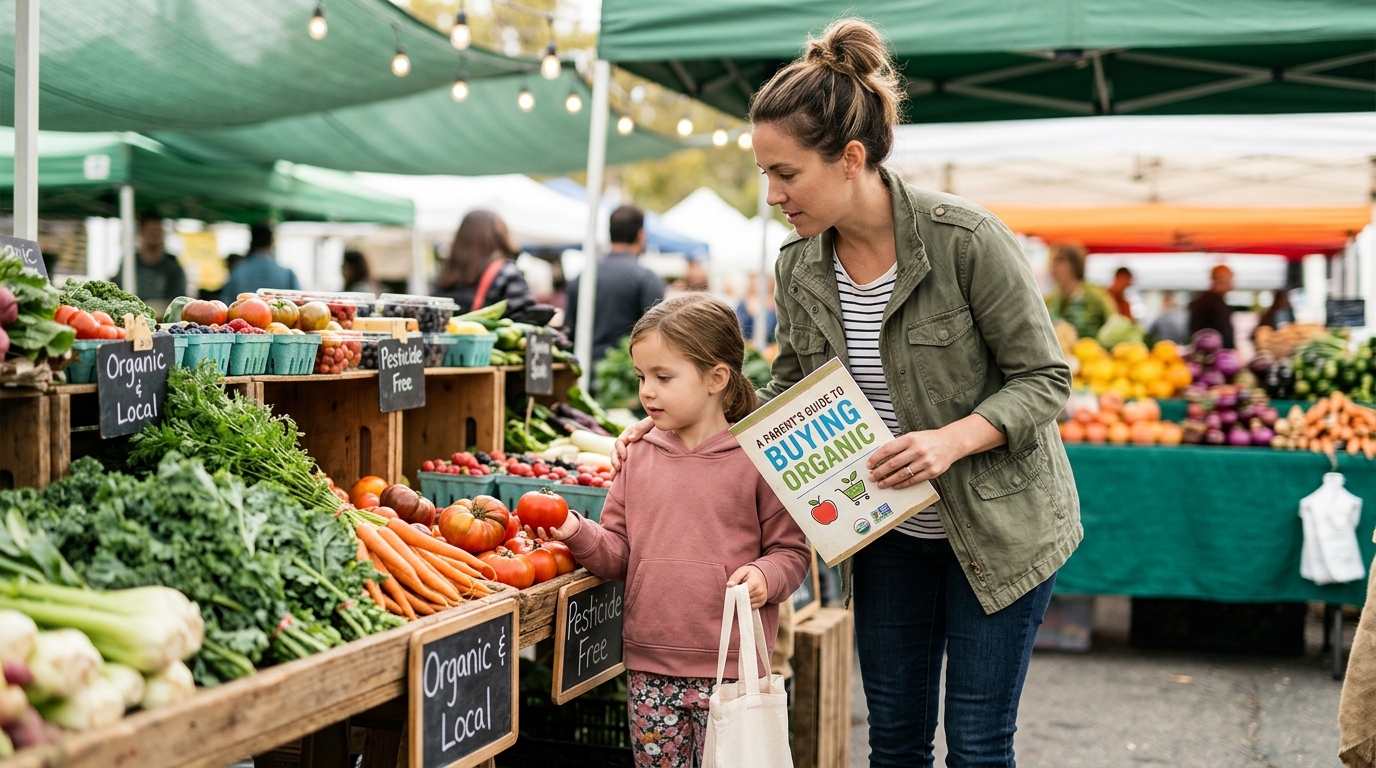
The Environmental Working Group's 2026 Dirty Dozen list ranks the conventional fruits and vegetables with the highest pesticide residues. Here's the full list, the Clean Fifteen, and a practical strategy for families on any budget.
Every spring, the Environmental Working Group (EWG) releases an updated ranking of the conventionally grown fruits and vegetables that carry the highest pesticide residues — even after washing. The 2026 list is here, and it's a useful guide for any family deciding where the organic premium is worth paying.
At GreenPeach, we believe nutrition is more than what's added to your supplements — it's also what you avoid putting into your body in the first place. Below is the official 2026 Dirty Dozen list, the companion Clean Fifteen, and a practical strategy for parents on a budget.
Download Guide
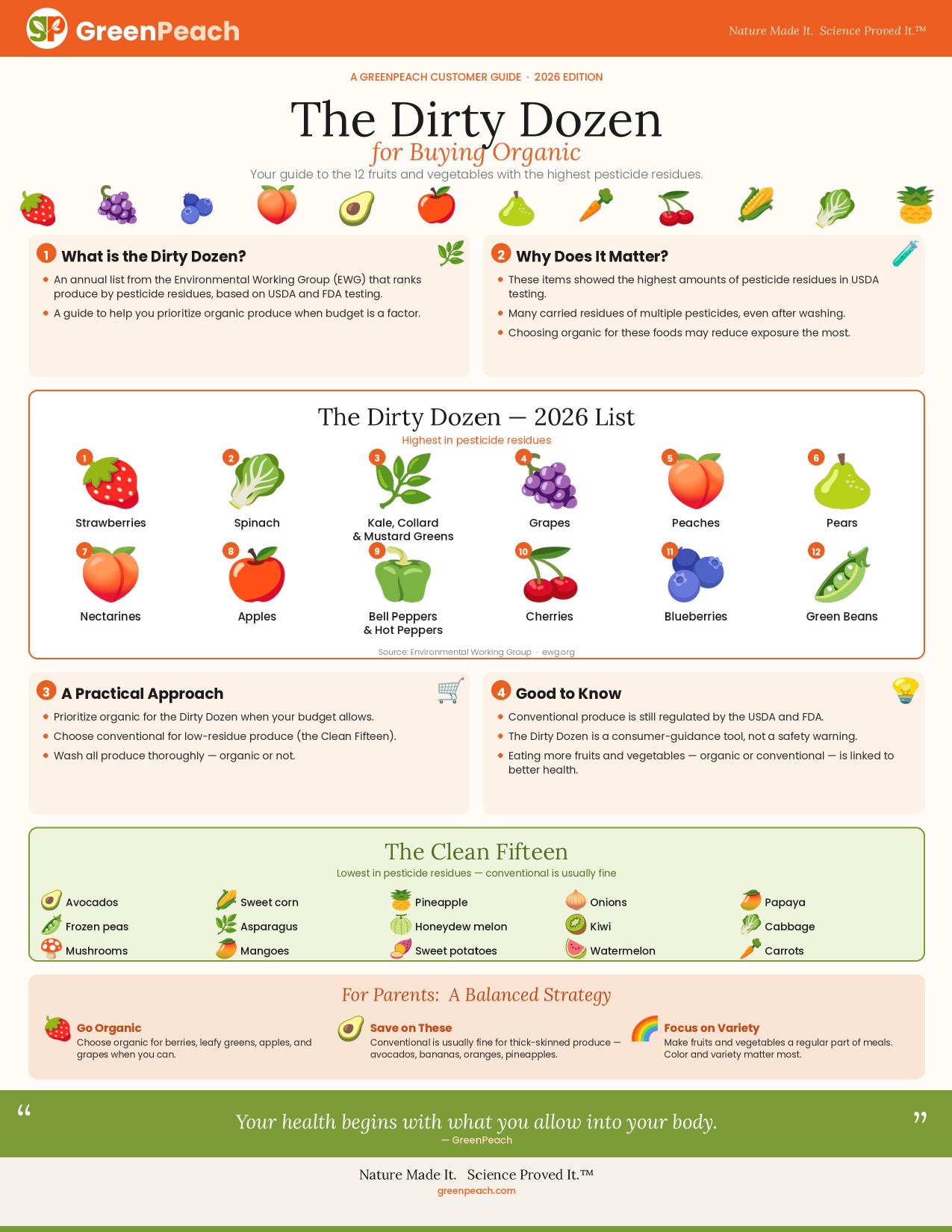
What is the Dirty Dozen?
- An annual list from the Environmental Working Group (EWG) that ranks produce by pesticide residues, based on USDA and FDA testing.
- A guide to help you prioritize organic produce when budget is a factor.
Why Does It Matter?
- These items showed the highest amounts of pesticide residues in USDA testing.
- Many carried residues of multiple pesticides, even after washing.
- Choosing organic for these foods may reduce exposure the most.
The Dirty Dozen — 2026 List
Highest in pesticide residues. Buy organic when you can.
- Strawberries
- Spinach
- Kale, Collard & Mustard Greens
- Grapes
- Peaches
- Pears
- Nectarines
- Apples
- Bell Peppers & Hot Peppers
- Cherries
- Blueberries
- Green Beans
Source: Environmental Working Group · ewg.org
The Clean Fifteen
Lowest in pesticide residues — conventional is usually fine.
- Avocados
- Sweet corn
- Pineapple
- Onions
- Papaya
- Frozen peas
- Asparagus
- Honeydew melon
- Kiwi
- Cabbage
- Mushrooms
- Mangoes
- Sweet potatoes
- Watermelon
- Carrots
A Practical Approach
- Prioritize organic for the Dirty Dozen when your budget allows.
- Choose conventional for low-residue produce (the Clean Fifteen).
- Wash all produce thoroughly — organic or not.
Good to Know
- Conventional produce is still regulated by the USDA and FDA.
- The Dirty Dozen is a consumer-guidance tool, not a safety warning.
- Eating more fruits and vegetables — organic or conventional — is linked to better health.
For Parents: A Balanced Strategy
- Go Organic — Choose organic for berries, leafy greens, apples, and grapes when you can.
- Save on These — Conventional is usually fine for thick-skinned produce — avocados, bananas, oranges, pineapples.
- Focus on Variety — Make fruits and vegetables a regular part of meals. Color and variety matter most.
Your health begins with what you allow into your body.
— GreenPeach
Real food, with the gaps filled in
Most American families eat well enough. The shortfall isn't calories — it's the specific vitamins and minerals that modern soil, modern produce, and modern schedules quietly leave out.
Every GreenPeach formula is built around clean, food-based ingredients. No artificial dyes, fillers, or preservatives. Just what's actually missing.
Nature Made It. Science Proved It.™
Cover the daily basics with the GreenPeach Liquid Multi-Vitamin, clean ingredients and easy dosing.