GreenPeach Blog › supplements-nutrition
How to Read a Supplement Label (and What It Doesn't Tell You)
By Feryal Talebdoost · Published 2026-11-09
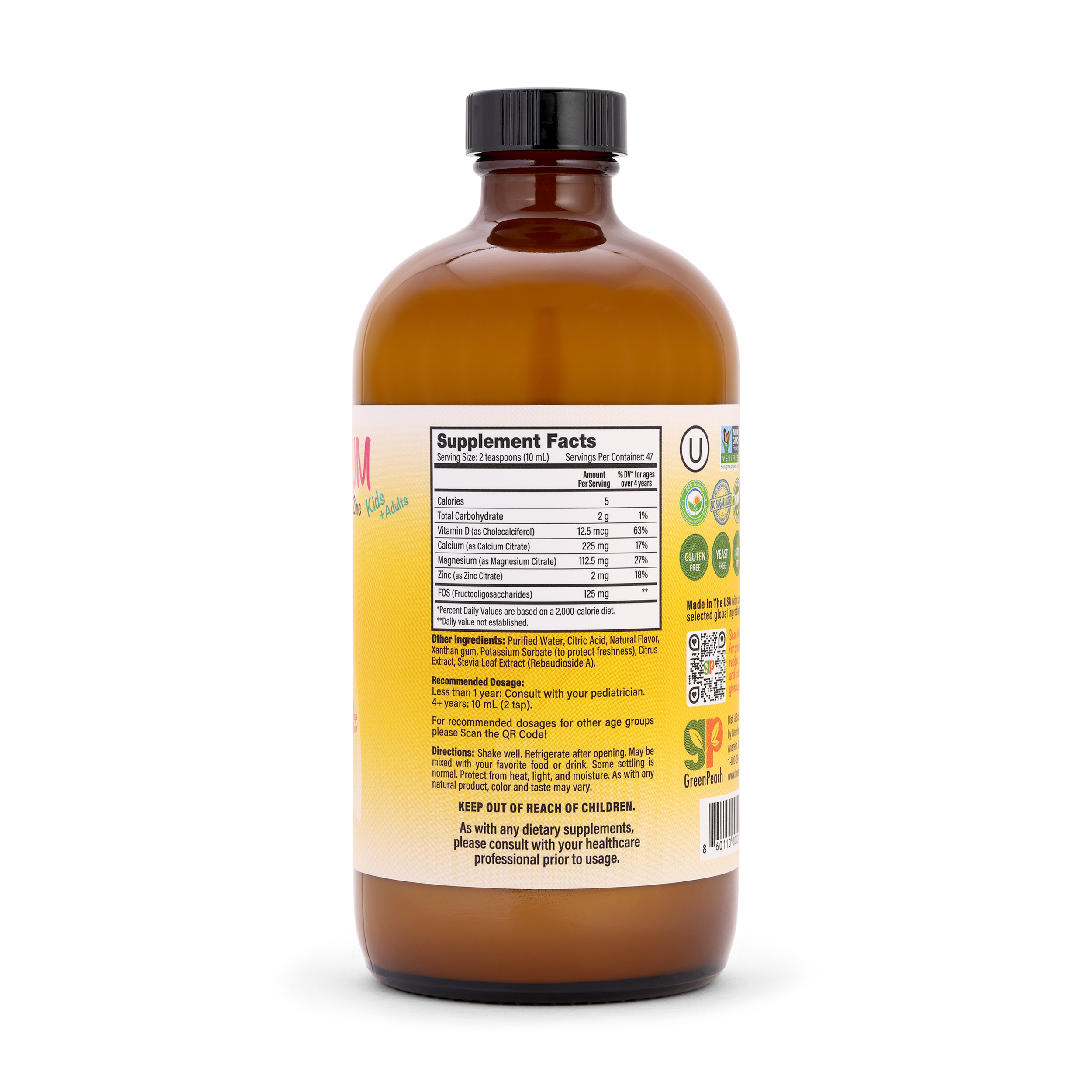
Learn how to read Supplement Facts, serving sizes and Daily Values, and what a label cannot tell you. Includes a free Read the Back cheat sheet.
Nobody at the FDA approved the vitamins in your kitchen cabinet before they went on sale. That goes for the label on the bottle, too.
Under a law passed in 1994, the company selling a supplement is responsible for making sure it's safe and that its label is truthful. That alone is a good reason to learn how to read a supplement label. The back of the bottle is the company speaking to you directly, and most of us skip right past it. We look at the front and maybe the price.
I was a speaker at an event when someone asked me about one of our product labels, and it hit me how little the average person knows about reading one. Even the people who do know how to read a label don't know what they really don't know.
So let's start with the basics, then get into what a label can't tell you. That's the part I wish more people asked about.
Why the back of the bottle matters
The front of a bottle is designed to catch your eye. The back is where the required information goes: the Supplement Facts panel, the other ingredients, the directions and the name of the company responsible for the product.
A lot of people are relying on that small print. In the CDC's 2017 to 2018 national survey, 57.6% of US adults had used a dietary supplement in the past 30 days.
I've worked in food manufacturing for about 20 years, mostly in formulation and quality assurance, so I've spent most of my career on the other side of that label. I know how much work goes into the numbers on a panel. I also know the label only gives you the summary. The testing and paperwork behind it live somewhere else.
The basics of reading a supplement label
Start with the Supplement Facts panel. Everything on it is per serving, so look at the serving size before anything else. If a serving is two teaspoons and your child takes one, they're getting half of every amount listed.
The words in parentheses tell you the form of an ingredient, like magnesium as magnesium citrate. The %DV compares one serving to an FDA reference amount. It's a general guide, and it isn't a personal target for you or your kids.
Below the panel, read the other ingredients and any "Contains" line. That's where you'll find allergens, along with things you might want to avoid, like added sugar or dyes. If you see a claim with an asterisk next to it, follow the asterisk. It leads to a disclaimer saying the FDA hasn't evaluated that statement.
We put all of this on a one-page cheat sheet called Read the Back, with each part of the label numbered.
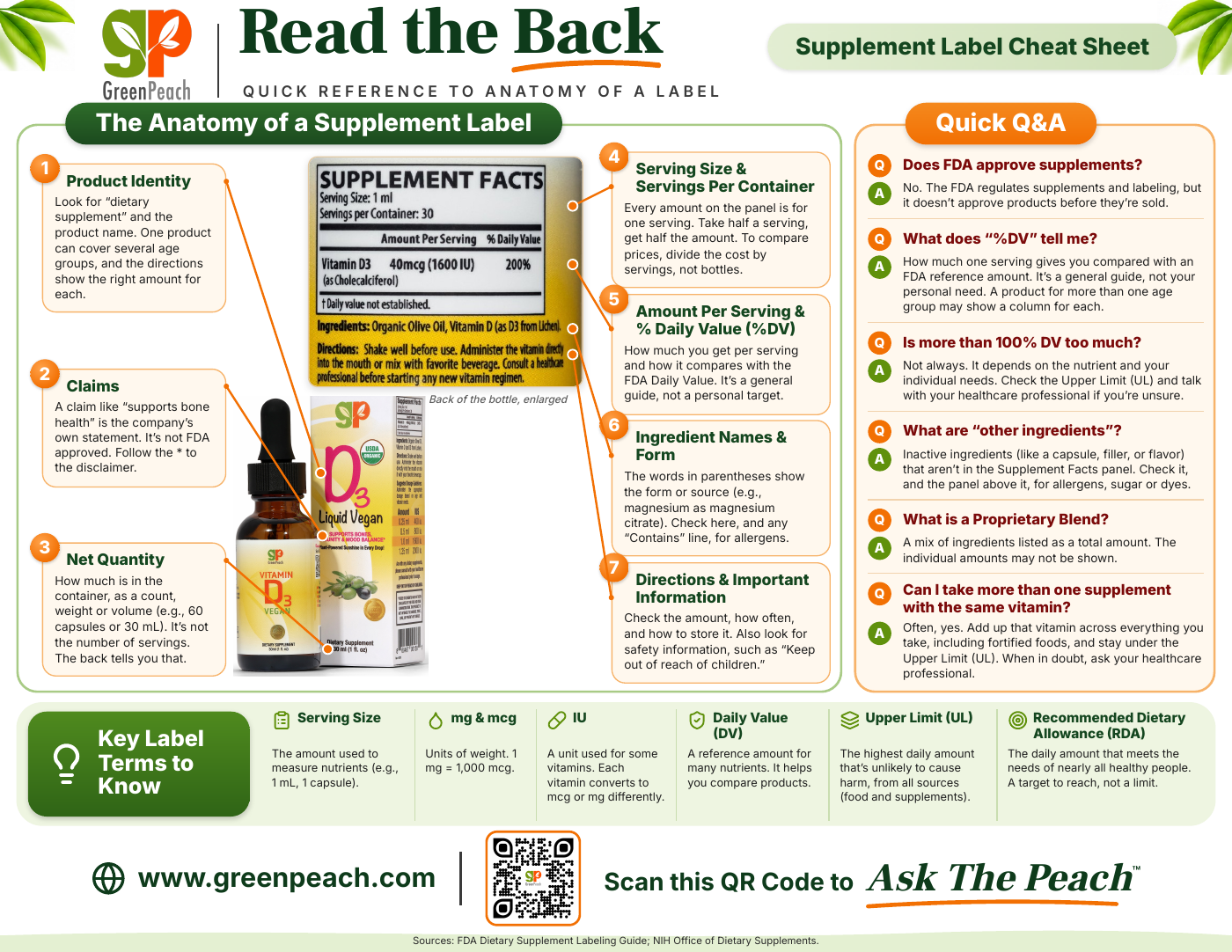
Read the Back: free printable
Keep the Read the Back cheat sheet handy when checking labels. Free one-page PDF. No signup required.
Download the free PDFOpens in a new tab.
What a supplement label doesn't tell you
Everything above is printed right there on the bottle. What you can't see is how anyone knows those numbers are right.
Does what's in the bottle match the label?
The law expects the label to be accurate, but the FDA doesn't review supplements or their labels before they're sold. That job belongs to the company.
In 2023, researchers writing in JAMA tested 25 melatonin gummy products sold in the US. Only three came within 10% of what their labels said, and the actual amounts ranged from 74% to 347% of the label. A 2022 study in JAMA Network Open looked at 30 immune-support supplements bought online. Seventeen had inaccurate labels, and nine contained things that weren't listed at all.
Both studies were small, and they don't speak for every brand. I share them because they show why it's fair to ask a company how it knows its label is right.
What else could be in the bottle?
Contaminants like heavy metals aren't ingredients, so they're never listed. Federal manufacturing rules do require companies to set limits on contamination and test against those limits. You just won't see the results on the bottle. You have to ask for them.
What's inside a blend or a flavor?
A proprietary blend lists its ingredients and the total weight of the blend, but not how much of each ingredient is in it. That's legal, and it's common. As of 2022, about 1 in 5 labels in the NIH's supplement label database listed ingredients in a proprietary blend.
Flavors work the same way. A label can simply say "natural flavor" or "artificial flavor" without listing what's in the flavoring. Major allergens still have to be named under federal allergen law. And some processing aids used during manufacturing don't have to be listed at all, as long as only tiny amounts are left and they do nothing in the finished product, according to FDA guidance.
Who actually made it?
If you see "Distributed by" or "Manufactured for" on a label, the company named there didn't make the product itself. That's common, and there's nothing wrong with it. It does mean the label won't tell you who made what's inside, so it's a fair question to ask.
How to find what the label leaves out
Most of what's missing, you can get just by asking. Start with the Certificate of Analysis (CoA) that matches the lot number on your bottle. Look at who did the testing and whether heavy metals were part of it. A good company will be glad you asked.
An independent seal from a tester like USP or NSF International helps too. According to the NIH Office of Dietary Supplements, these seals mean a product was checked for what's on its label and for harmful levels of contaminants. They don't mean a product is safe or effective for you, so it's still worth taking your bottles to your doctor or pharmacist, especially for your kids or during pregnancy.
Louis Brandeis wrote in 1913 that "sunlight is said to be the best of disinfectants." He was talking about banks, but I think it fits supplements just as well. When a company shows you its testing, you don't have to take its word for it.
That's why at GreenPeach, we share the Certificate of Analysis for every product. You can find it on greenpeach.com, or just scan the QR code on the label.
Turn the bottle around
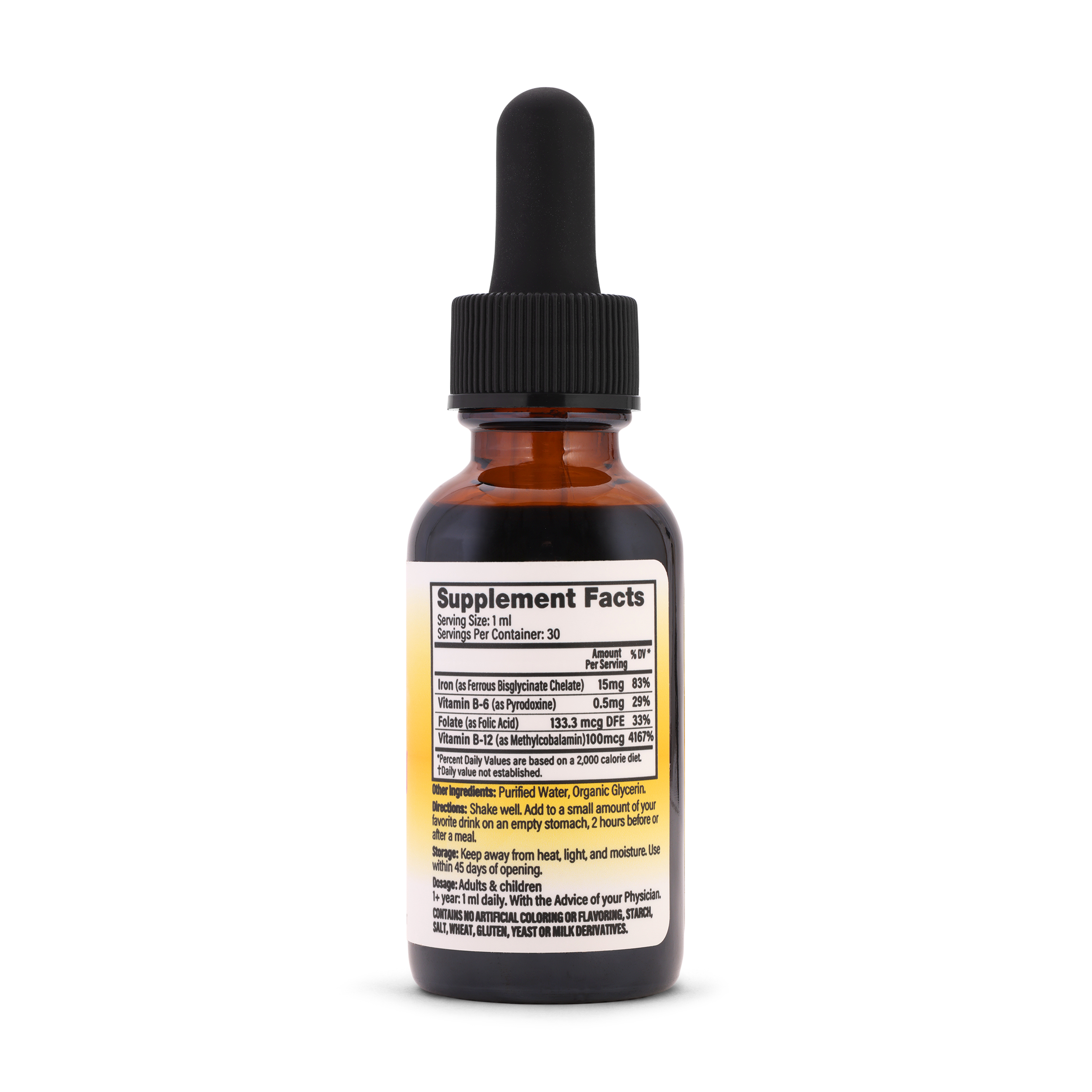
If you've never really read the back of a supplement, don't feel bad. Most of us were never taught how. The gap is the problem, not the people.
Next time you pick up a bottle, turn it around before it goes in your cart. And when something you'd want to know isn't printed there, ask.
Put your label-reading skills to work
Explore GreenPeach supplements and review the product information before choosing what's right for you.
Read the Back: free printable
Keep the Read the Back cheat sheet handy when checking labels. Free one-page PDF. No signup required.
Download the free PDFOpens in a new tab.